Overview
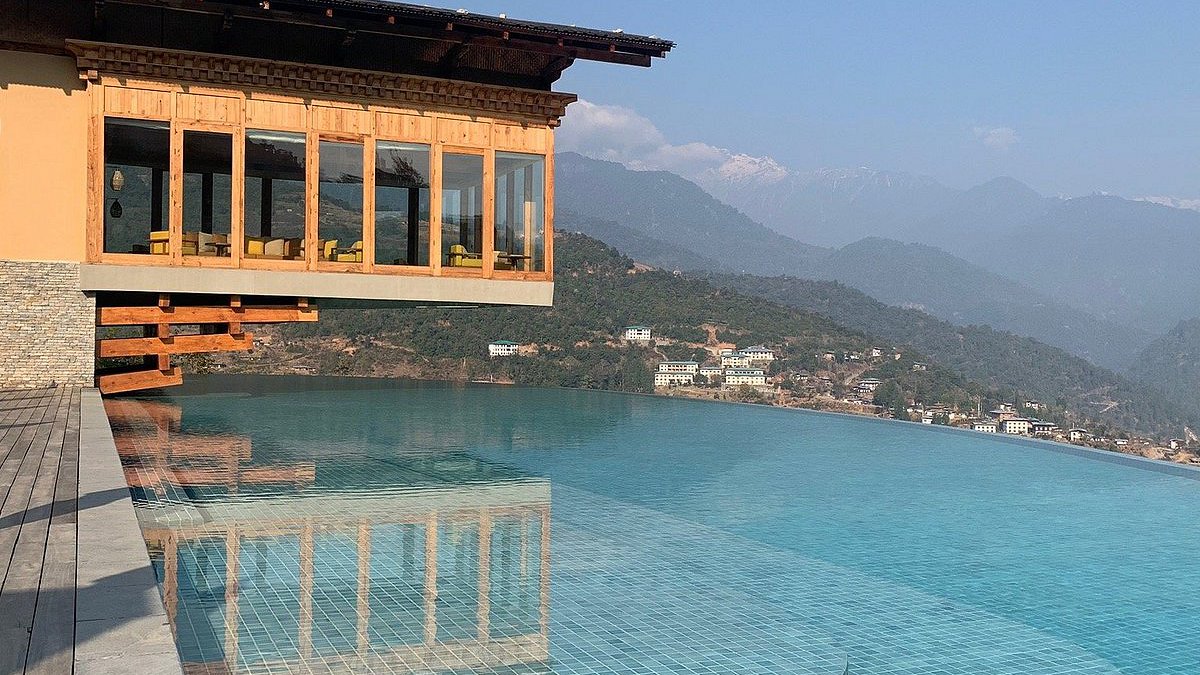
Nestled amid emerald rice terraces and citrus groves, this property is best known for its striking “Flying Farmhouse” lounge, a cantilevered pavilion that seems to hover above the pool and paddies. The design captures Bhutan’s mountain serenity while framing valley views from almost every angle. Calm, light-filled interiors, purposeful wellness, and an immersion into local landscapes set the tone for an unhurried Himalayan retreat.
Rather than a stand-alone resort, the lodge forms part of a wider journey across Bhutan’s western valleys. Travelers often combine nights here with sister lodges to trace contrasting altitudes and moods—from fortress-filled capitals to misty glacial valleys—yet Punakha’s gentler climate and pastoral setting make it the most languid pause on the circuit.
Location & Setting
The accommodation sits in the fertile Punakha Valley, historically the country’s winter capital and still home to the river-confluence citadel of Punakha Dzong. Lower elevations mean milder temperatures for much of the year, with terraces of rice and chili fields giving the landscape its signature patchwork. Reaching the valley from Thimphu involves a scenic drive over Dochu La Pass, whose cloud-swirled chortens and panoramas offer one of the kingdom’s most memorable road moments.
Days here stretch to the rhythm of village life: gentle bike rides past prayer-flagged bridges, riverside pauses along the Mo Chhu, and contemplative visits to hilltop monasteries. Sunsets wash the paddies in gold, while the dzong’s whitewashed walls glow softly in the distance.
Suites & Design
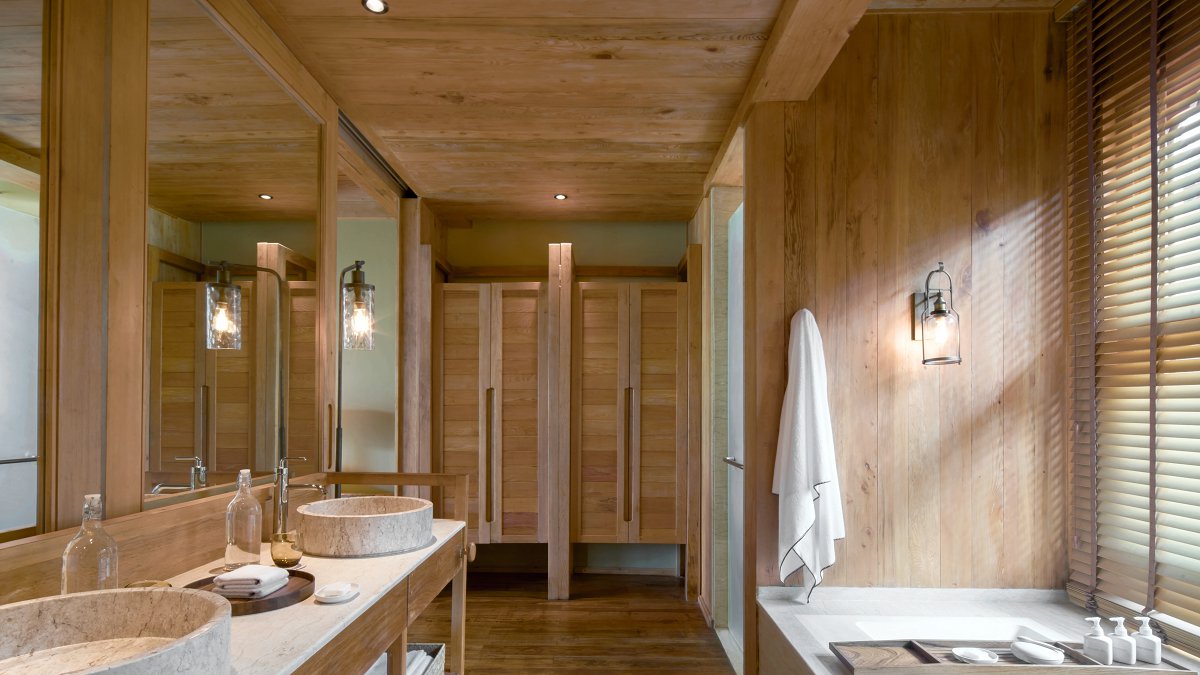
Accommodation spans 19 keys in total—16 suites and three villas—each oriented to valley or paddy views through generous glazing. The aesthetic blends warm local woods and woven textiles with crisp lines and uncluttered layouts, letting the setting take center stage. Private balconies or terraces extend living space outdoors; select villas add pools for an extra dose of seclusion.
Shared spaces are thoughtfully scaled: a living room and small library for quiet reading, the dramatic cantilevered lounge for sunset conversations, and a heated outdoor pool that invites an afternoon float with nothing but birdcall and breeze for company. The architecture nods to traditional farmhouse forms yet feels resolutely contemporary in its restraint.
Dining & Drinks
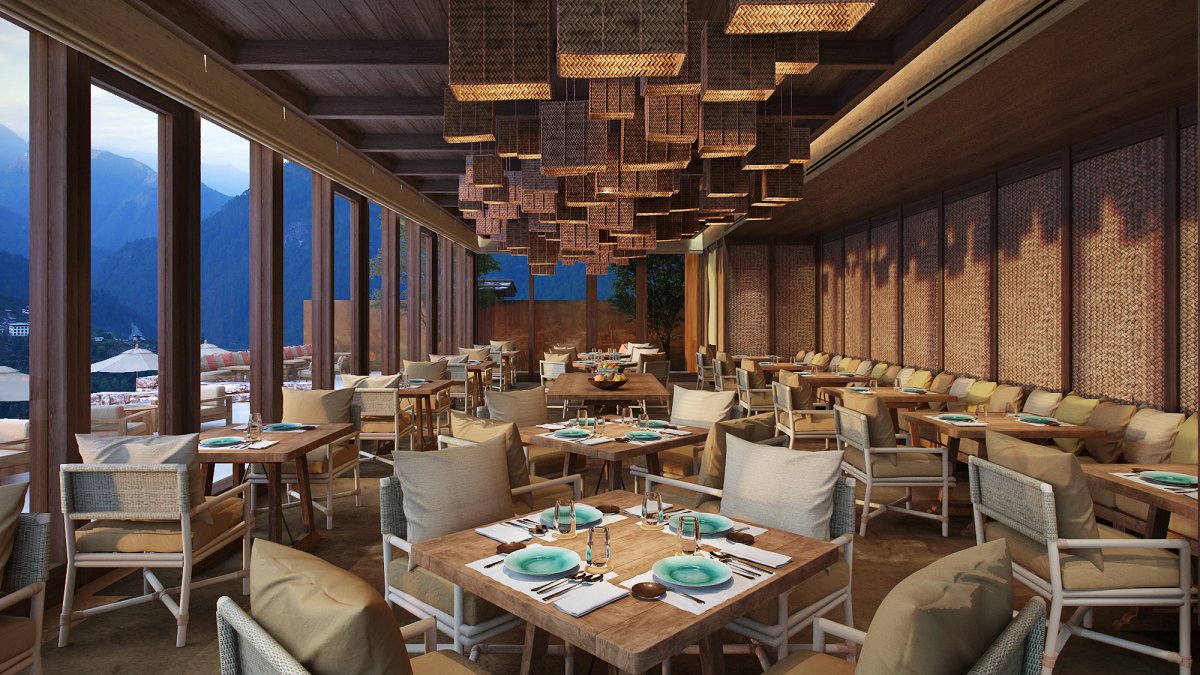
The restaurant offers all-day dining with indoor and alfresco seating, pairing Bhutanese staples—think red rice, seasonal vegetables, local cheeses—with comforting international plates. Produce-first cooking and gentle seasoning suit days spent outdoors; those curious about regional flavors might sip a tangy ara (local spirit) or sample chili-forward curries tempered by nutty rice and mountain herbs.
As light fades, the valley becomes a silhouette of terraces and distant ridgelines. It’s a fine moment for a riverside aperitif experience, or simply to linger in the “Flying Farmhouse” lounge and let the paddy fields darken into a star-pricked night.
Wellness & Experiences
Wellbeing is unhurried and elemental. A compact spa centers massages and body rituals, while a simple yoga hut hosts asana and breathwork sessions that borrow the valley’s stillness. Visiting practitioners rotate seasonally, and wellness programs can be woven around hikes, contemplative practices, or gentle recovery after high-altitude days elsewhere on the circuit.
Beyond the spa, the experiences roster leans into place: sunrise walks to a nearby monastery for breakfast and prayers, guided meditations, cycling routes that end at the dzong, or hands-on moments with local traditions such as ara making. Each adds texture to the valley’s pastoral narrative without rushing the pace.
Practicalities
Punakha’s warmer microclimate makes it appealing across much of the year, with spring planting and autumn harvest adding seasonal color to the paddies. Most itineraries begin or end in Paro, with transfers arranged over scenic mountain roads; expect unhurried drives that are part of the experience. As with all travel in Bhutan, the country’s sustainability-first approach shapes logistics and mindset, encouraging deeper engagement with community and landscape.
For travelers seeking a softer, slower chapter within a broader Bhutan journey, the accommodation offers precisely that: thoughtful design, meaningful quiet, and a front-row seat to valley life—best savored one unhurried day at a time.