Arrival & First Impressions
Mandarin Oriental, Tokyo crowns the upper floors of the Nihonbashi Mitsui Tower, where a soaring lobby on the 38th floor opens to sweeping city panoramas. The design channels a subtle “wood and water” theme, with natural textures and vast windows that frame the skyline in both directions. From the first elevator ride skyward, this property telegraphs a calm, contemporary mood high above the district’s historic streets.
The public spaces sit across the top levels, creating a vertical urban resort of lounges and restaurants that radiate from the sky lobby. Daylight pours in, and by night the city’s luminous grid becomes part of the décor, giving arrivals and late-evening nightcaps equal theatrical impact.
Rooms & Design
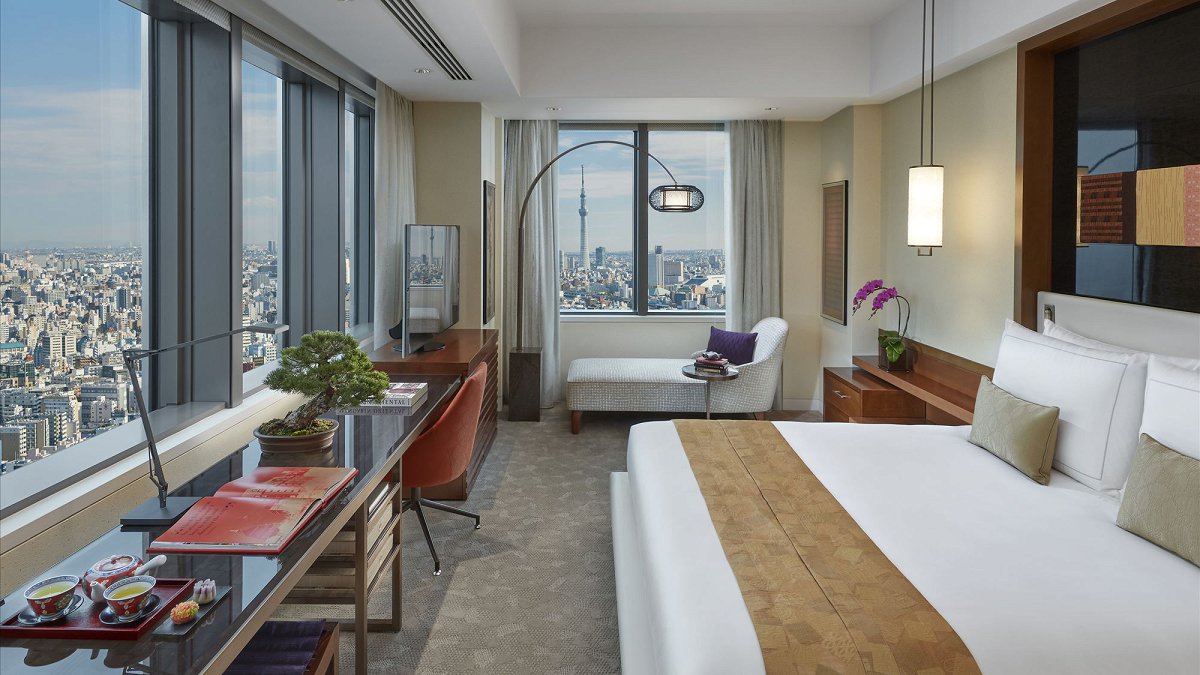
Guestrooms, set between the 30th and mid-30s floors, feel like quiet aerie retreats above the business core. Generous footprints, clean-lined furniture, and thoughtful joinery foreground the views—on clear days, distant Mount Fuji glints on the horizon. Details are distinctly Japanese: pale woods underfoot, delicate textile accents, and softly diffused lighting that reads warm rather than glossy.
Bathrooms are spacious, typically pairing a walk-in shower with a soaking tub and smart toilet. Amenities are high-end and the bedding programme includes an extensive pillow menu aimed at tailoring sleep. Rooms often include small niceties—like binoculars for skyline spotting—that encourage lingering at the glass rather than rushing out the door.
Dining & Drinks
A major reason to base in this property is the dining lineup concentrated across the 37th and 38th floors. The tasting-counter theatre of Tapas Molecular Bar is the head-turner, an intimate experience where playful courses meet cinematic views. For classic comfort executed with finesse, K’shiki serves Italian-leaning plates from breakfast through dinner, while the cult favourite Pizza Bar on 38th turns out delicate, blistered pies at a chef’s counter.
Asian options are equally compelling: Sense presents refined Cantonese cooking in a dramatic, window-lined room, and sushi devotees can book the serene counter at Sushi Shin by Miyakawa. Pre- or post-dinner, the Mandarin Bar and the Oriental Lounge offer polished cocktails, afternoon tea, and front-row seats to the city’s nightly light show. The breadth means in-house dining never feels repetitive, a boon for longer stays and jet-lagged appetites.
Wellness & Facilities
The spa, perched high above the streets, leans into ritual and view. Thermal areas include onsen-style heat and water experiences and a vitality pool, ideal after flights or intensive sightseeing. Treatment rooms are cocooning, and fitness facilities feature floor-to-ceiling outlooks that make early treadmill sessions surprisingly appealing. There is no traditional swimming pool, so lap swimmers should calibrate expectations; otherwise, the wellness offering feels complete and carefully curated.
Location & Access
Nihonbashi is both old-Tokyo and thoroughly connected. Direct, weather-proof links from the building reach Mitsukoshimae Station on the Ginza and Hanzōmon lines and Shin-Nihombashi on the JR Sobu line, while Tokyo Station sits a pleasant walk away. Department stores—including historic Mitsukoshi—line nearby streets, and Ginza’s boutiques and the Imperial Palace area are within easy reach. For travelers planning rail day trips, the address is especially convenient without sacrificing the quieter, more local character of this quarter.
Service, Atmosphere & Value
Service follows the brand’s high-touch playbook: anticipatory, precise, and unfailingly courteous, yet rarely intrusive. Families benefit from connecting-room configurations and considered touches at breakfast; couples find privacy in corner layouts and late-evening bar seating; business travelers appreciate the efficiency and direct transport access. Across the board, the product balances drama—those double-height windows and high-altitude restaurants—with low-key comfort in the rooms, so the hotel functions as both a vantage point and a refuge.
With its sky-lobby theatricality, serious culinary programme, and a spa that trades crowds for hush and horizon, Mandarin Oriental, Tokyo remains a benchmark for contemporary luxury in the capital. If you value design that frames the city rather than competes with it, dining that can anchor an entire stay, and service that removes friction at every turn, this property is an easy recommendation—and one that rewards both short stopovers and longer Tokyo immersions.