Setting & First Impressions
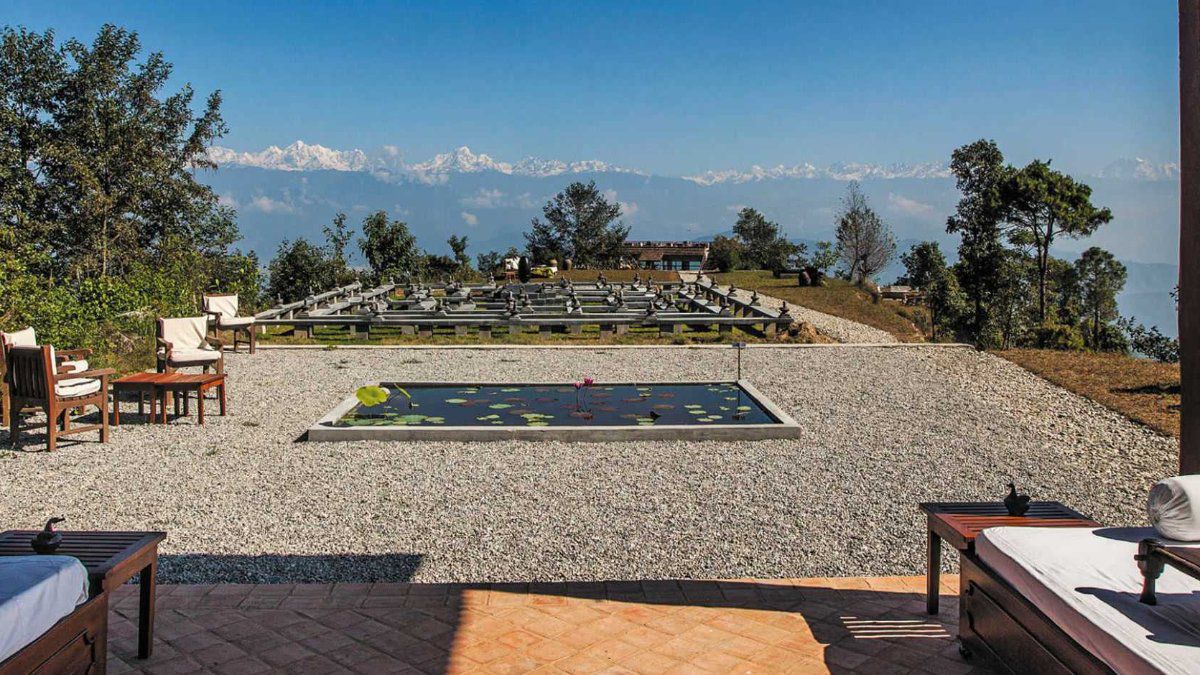
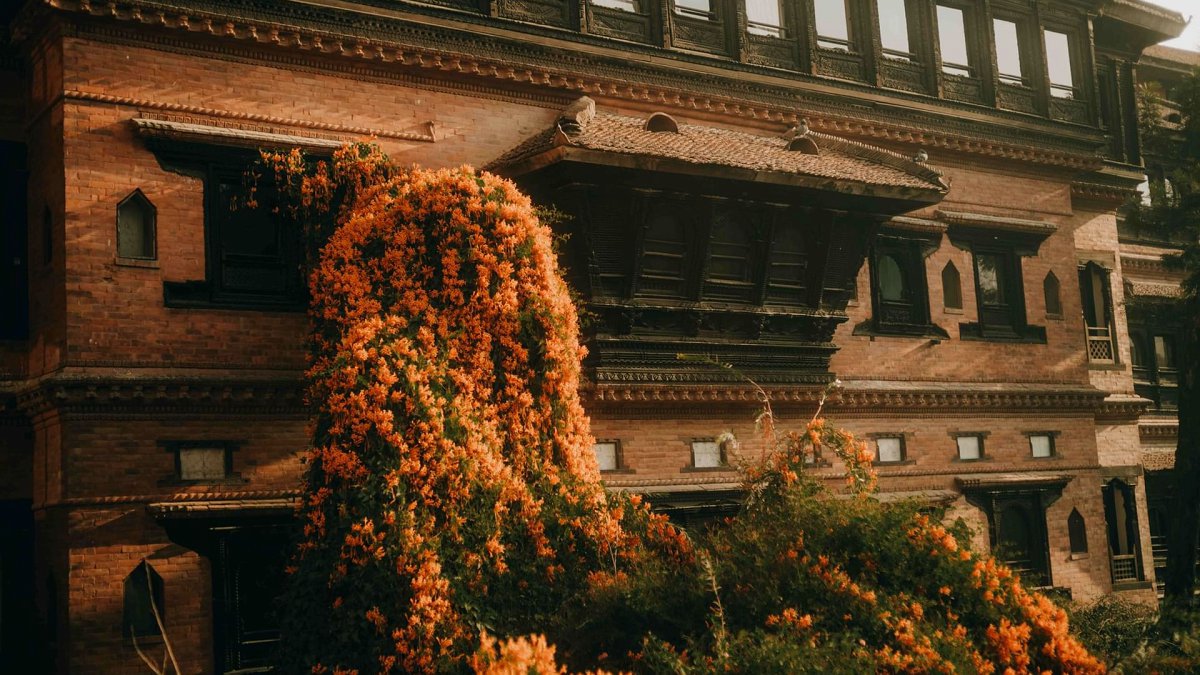
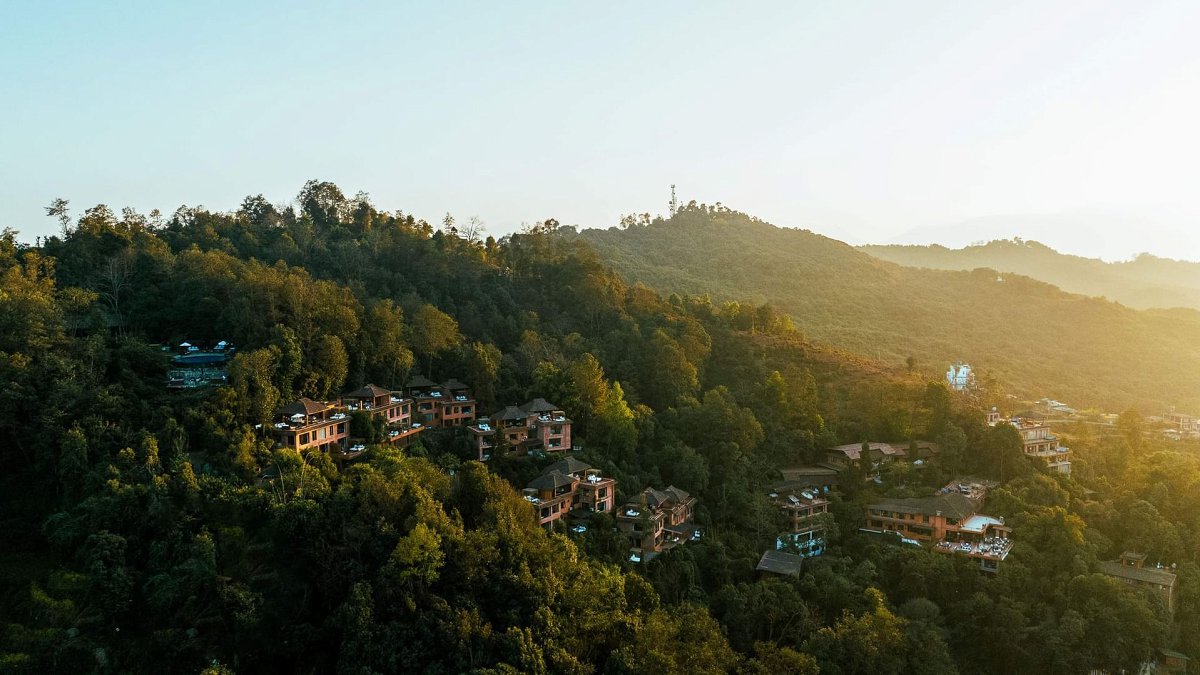
Perched on a forested hillside an hour or so from Kathmandu, this sanctuary looks across a sweep of Himalayan peaks that can include Langtang Lirung, Dorje Lakpa and the bulk of Gauri Shankar on clear days. The approach winds through a Newari town and up into terraced slopes, where the resort is laid out like a village, its pathways, stone steps and planted courtyards revealing new vantage points at every turn. Afternoons often gather drama in the sky; after brief mountain squalls, clouds tear open to silhouettes of ridgelines that feel impossibly near.
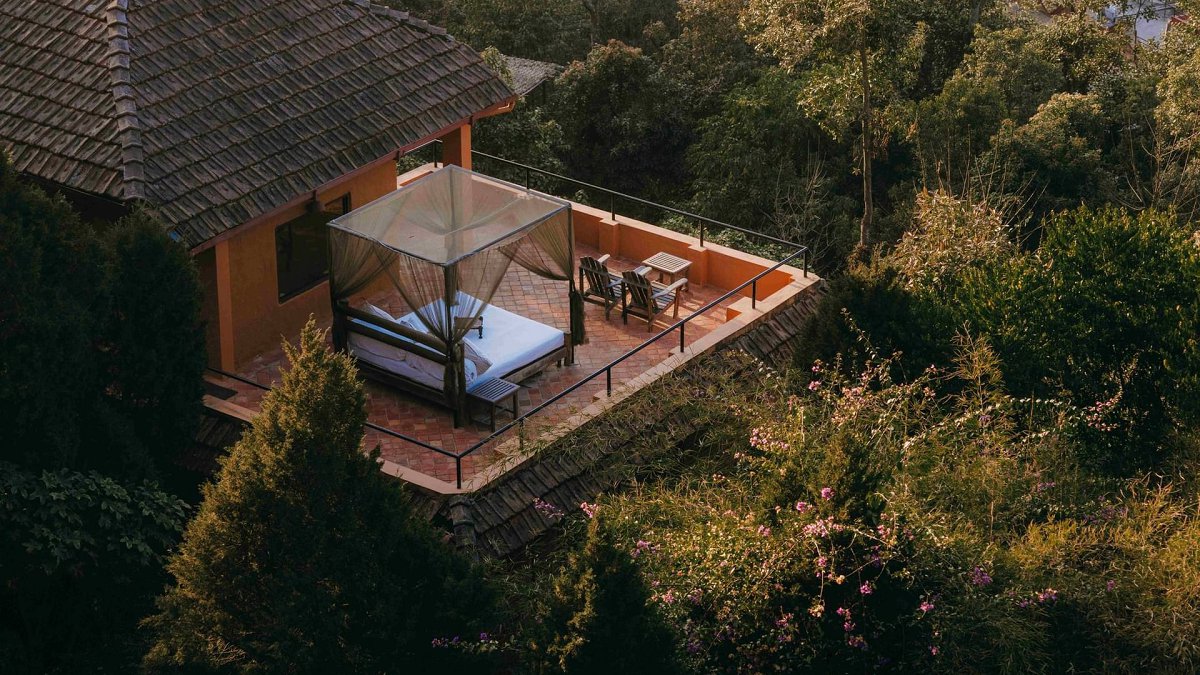
Arrival sets the tone: calm, uncluttered spaces, the scent of local woods, and glass-walled lounges positioned for sunrise and sunset. Daybeds appear in nooks and on terraces, inviting long, unhurried hours of watching light move across the valley.
Design & Suites
Dwarika’s Resort Dhulikhel is an all-suite property that blends rustic textures with contemporary comfort. Interiors use smooth timbers, handwoven textiles, and pebble-stone bathroom floors, while floor-to-ceiling windows frame the mountains like a living mural. Many suites extend into generous terraces with daybeds and low seating for tea, reading or simply being still. Thoughtful touches abound—homemade soaps, herbal bath salts, jars of local honey, and seasonal snacks—underscoring a philosophy of simple, well-considered luxury.
The architecture aims to merge indoors and out. Sliding doors invite mountain air; patterned linens soften the palette; and at night, low, warm lighting settles the mood. Nothing screams for attention; rather, materials and placement feel quietly intentional, letting the landscape lead.
Wellbeing & Nature
The resort’s ethos revolves around slow living and traditional Himalayan knowledge. Guests can join dawn breathwork on hilltop decks, light movement sessions, pottery and ink-painting in earth-walled studios, or guided practices on sound and stillness. Signature spaces include a Himalayan pink salt room—walls and floors built from glowing rock crystals—and a crystal house designed for deep, quiet focus. There is also a contemplative maze on the crest of the estate where soft chants drift on hidden speakers and the valley opens in every direction.
Ayurvedic consultations are available to help align daily rhythms—sleep, nourishment and gentle activity—with climate and constitution. The goal isn’t prescriptive regimens so much as reminders to listen to the body, something that comes more naturally when the only background noise is wind in trees and distant birdsong.
Dining
Ingredients drive the culinary program: produce comes from the resort’s own organic plots and nearby farms, keeping dishes fresh and seasonal. At Nature’s Flavours, menus lean into Nepali traditions and regional recipes, presenting balanced plates that feel both familiar and quietly elevated. The Japanese venue, Mako’s Zen, follows principles inspired by monastic cuisine—vegetarian, light on sodium, and mindful of texture and presentation—so you leave the table satisfied yet unburdened. Simple broths, delicate tempura and neatly rolled maki showcase how restraint can be richly expressive.
Between meals, herbal teas and infusions appear throughout the day, and the glass-lined lounge becomes a natural gathering point for dusk, when the mountains occasionally blush in pink and gold before fading to indigo.
Leisure & Facilities
An outdoor infinity pool sits above the valley, its edge vanishing into layered hills. Elsewhere, you’ll find quiet walking trails, small pavilions for reading, and tucked-away platforms for stretching or stillness. The wellness complex offers heat and hydro experiences, along with simple, restorative rituals drawn from the region. Days tend to fall into an easy cadence: a slow breakfast, an unhurried workshop, time by the pool, then an early evening pause to watch weather sweep across the high peaks.
Importantly, the resort doesn’t force an agenda. It suggests a gentler tempo and provides spaces—both open and intimate—to inhabit that pace.
Location & Practicalities
Set above Dhulikhel at roughly 1,550 meters, the accommodation benefits from crisp mornings and clear, starry nights outside of monsoon months. Transfers from Kathmandu typically take around an hour depending on traffic and road works. Trails and cultural sites lie within easy reach, but many guests discover that the most rewarding excursions happen within the grounds: a quiet hour on a terrace can be as memorable as a long day trip.
For travelers seeking immersion in mountain life without high-altitude rigors, Dwarika’s Resort Dhulikhel offers a persuasive alternative: comfort rooted in place, cuisines that nourish without excess, and wellness spaces that privilege presence over performance. The result is a stay that feels restorative, not performative—one that lingers like clear air after rain.