
Amanjiwo

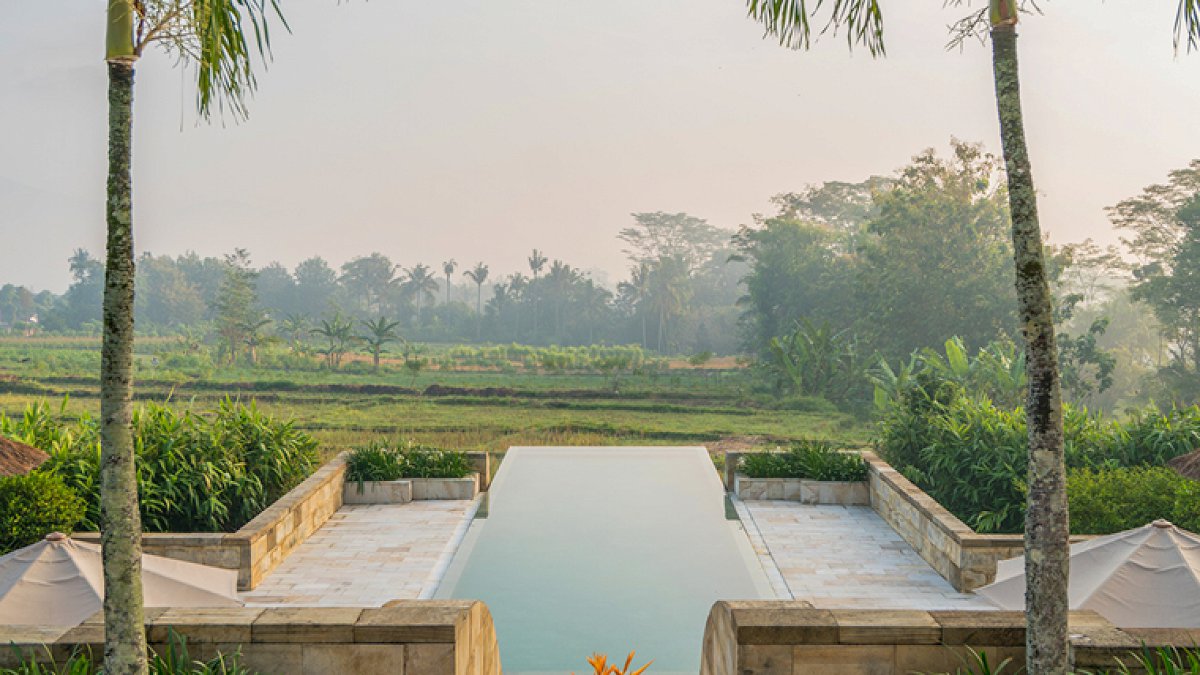
“From the stone terrace, the world's largest Buddhist monument emerges from the morning mist of the Kedu Plain.”

Our Review

Overview

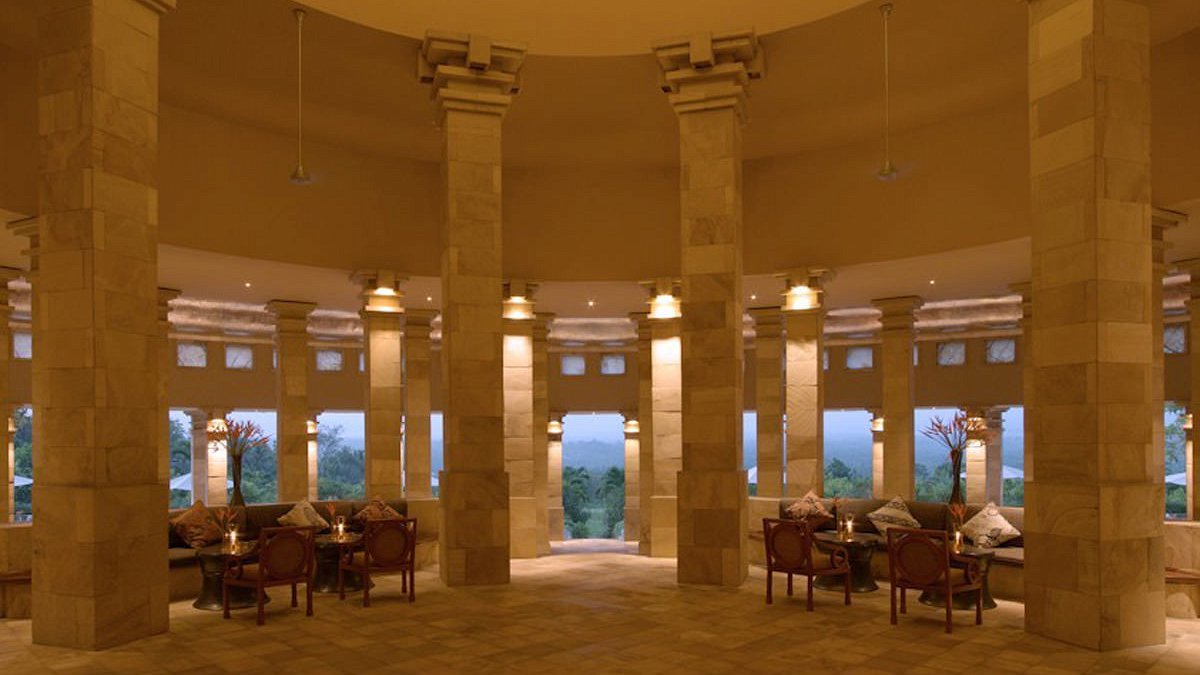
Nestled in Central Java’s Kedu Plain and oriented toward the 9th-century sanctuary of Borobudur, Amanjiwo offers an atmosphere of contemplative calm shaped by temple-inspired geometry and tactile stonework. Opening in 1997 with just 36 suites, the property channels the region’s cultural heritage through colonnades, dome-topped spaces, and axial views that frame misty volcanoes on the horizon. The result is a quiet, sculptural retreat where the rhythms of rural life—rice paddies, village lanes, and distant gamelan—set the backdrop for days that move unhurriedly from dawn to dusk. Throughout, craftsmanship and natural materials take precedence, lending a grounded elegance that never distracts from the landscape.

Location & Setting

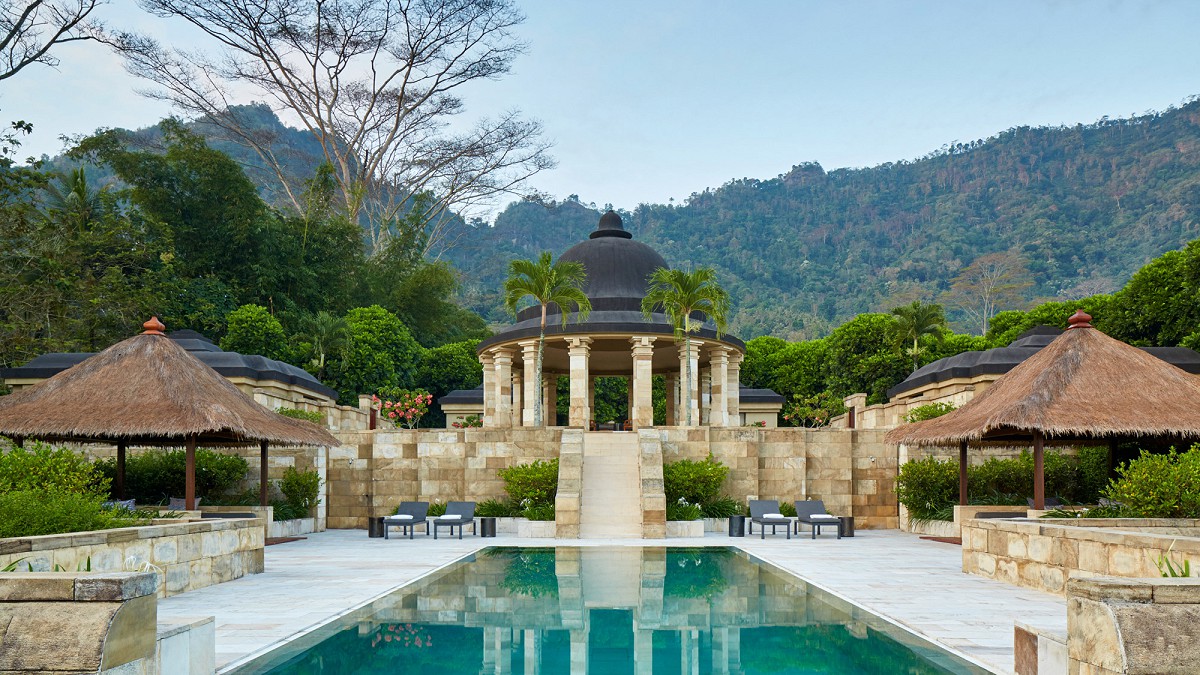
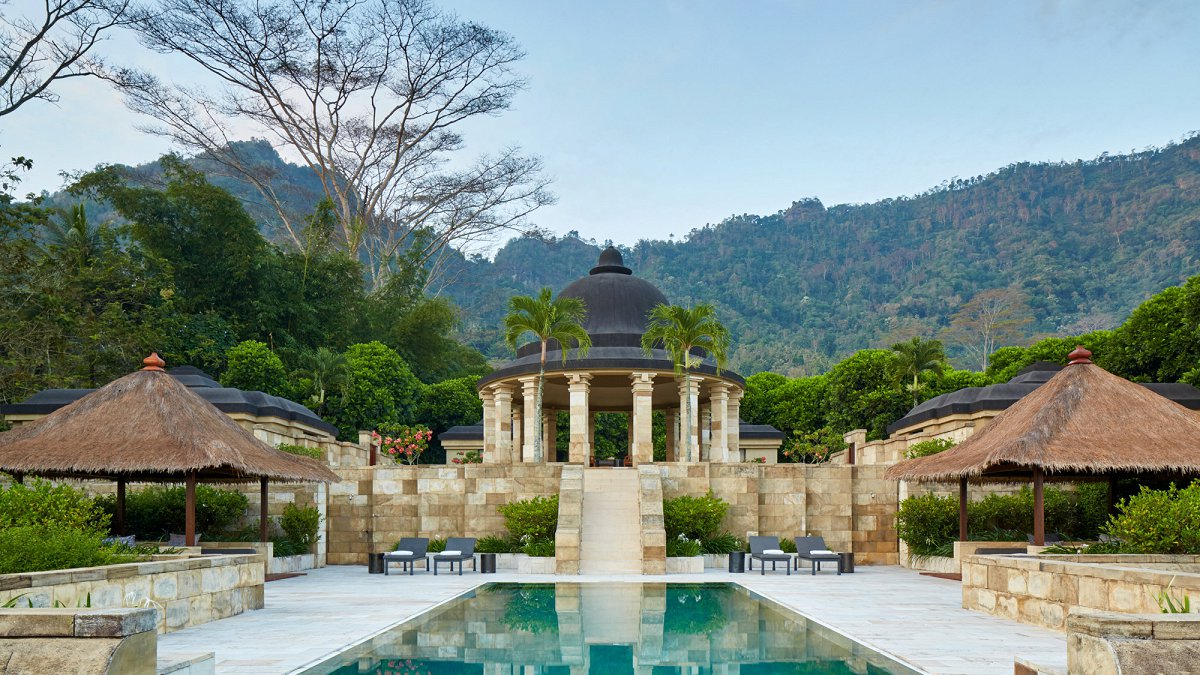
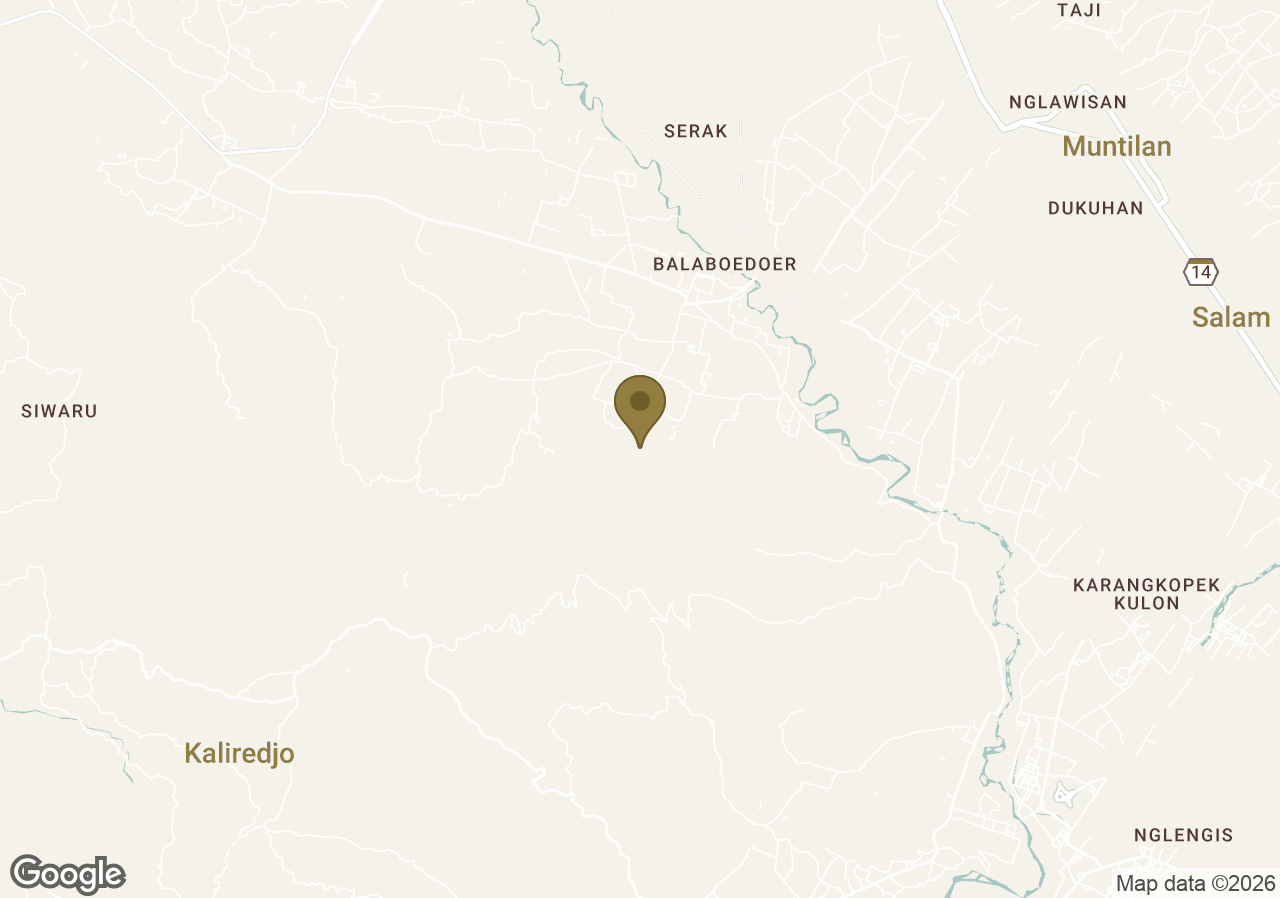
Set above the fertile Kedu valley, the hotel looks across jungle and fields to Borobudur, a UNESCO World Heritage Site, with the Menoreh Hills rising behind. The approach opens to a circular rotunda—its form echoing the temple’s concentric terraces—before stepping down to terraces, lawns, and a long, green-hued pool edged by rice paddies. From here, sunrise often reveals the silhouettes of Merapi and Merbabu, and the day’s adventures are close at hand: quiet village lanes for cycling, nearby candis for temple-hopping, and countryside tracks that climb into the hills. Despite the sense of seclusion, logistics are simple; the region’s main sights can be reached in minutes, making Amanjiwo an effortless base for cultural exploration.

Suites & Design

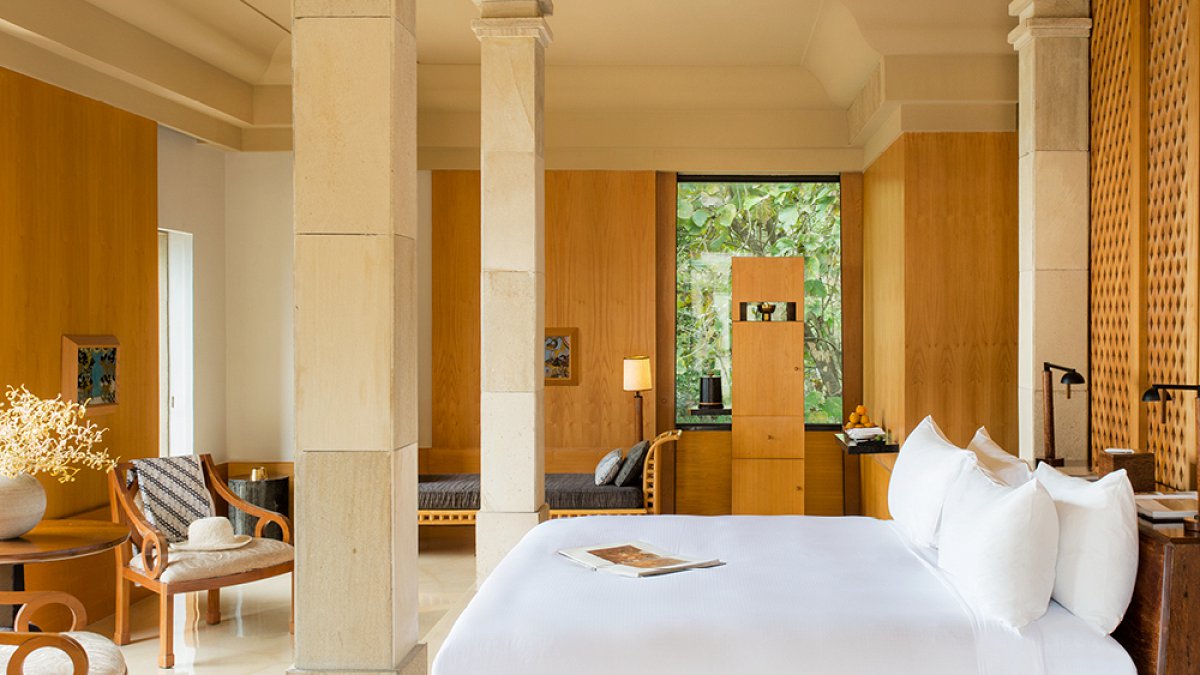
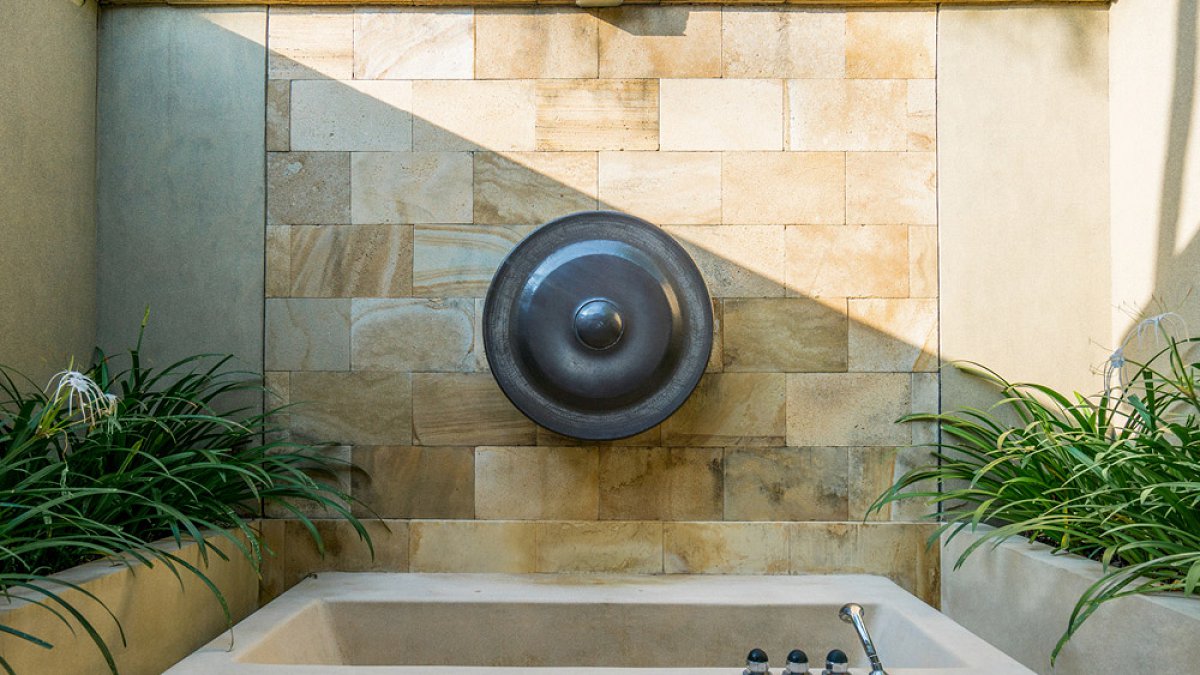
Architecture is the story here. Conceived by Ed Tuttle, the buildings use warm Javanese limestone and disciplined symmetry to create a temple-like procession of spaces. Suites arc in two crescents around the central rotunda, each a generous pavilion with high ceilings, carved screens, and garden courtyards. Many add private pools; the two-bedroom Dalem Jiwo Suite is a destination in itself, with 1,200 m² of living space and a 15-metre stone pool set among the fields. Bathrooms run the length of the pavilions, with terrazzo finishes and outdoor tubs that invite unrushed routines. Outside the suites, a 40-metre main pool lined in green Javanese stone feels like a ceremonial axis through the landscape—equally suited to laps in the morning and lingering twilight swims.

Dining

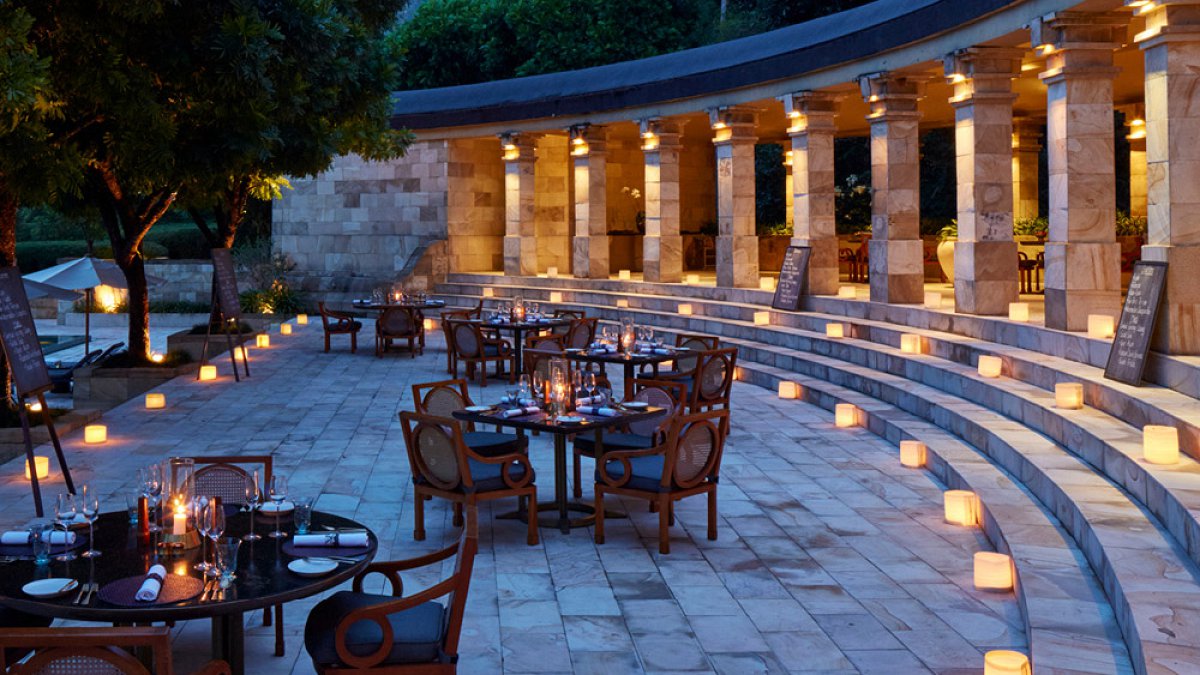
Meals unfold across colonnaded, semi-open settings that keep the scenery front and centre. The Restaurant & Bar serves an evolving mix of Javanese classics and international dishes, with a tasteful degustation format in the evenings for those who enjoy a set progression. Lighter options appear on the Pool Terrace, where views sweep over paddies toward the temple; at certain times of year, a rustic joglo pavilion becomes a characterful stage for private meals. Much of the produce is sourced from Amanjiwo’s gardens and nearby farms, so salads, sambals, and grilled fish arrive bright and precise rather than heavy. Private picnics—on a hilltop bale above the Progo River or beside a quiet candi—extend the culinary experience into the landscape.

Experiences & Wellness

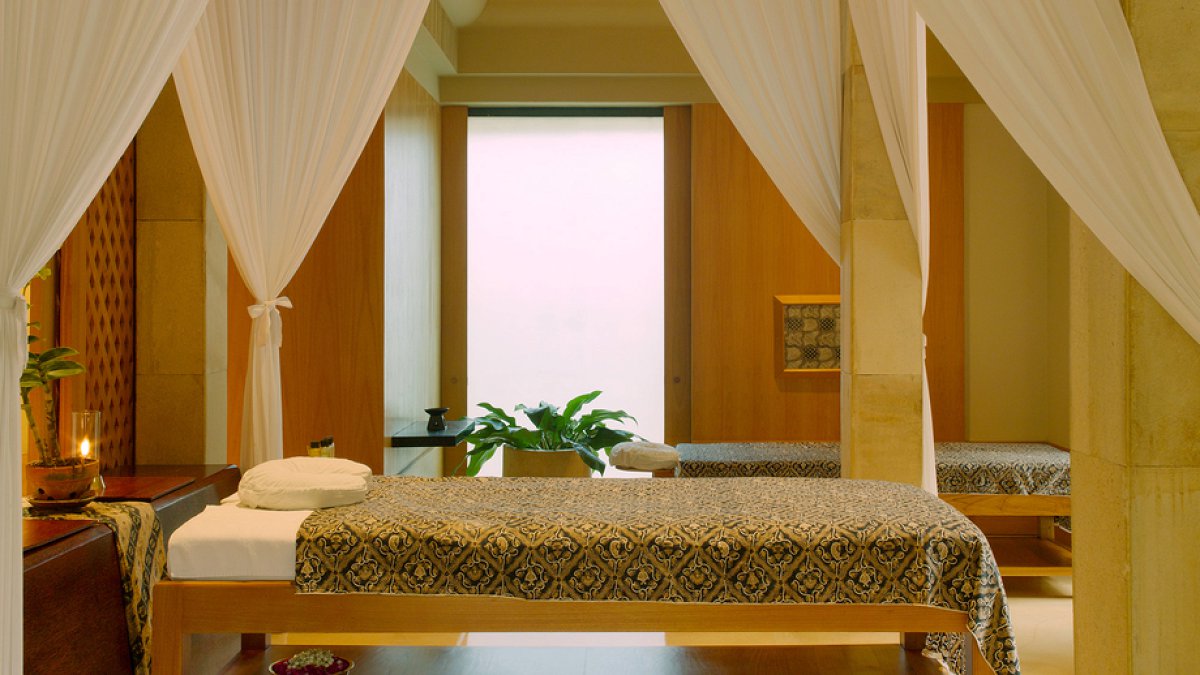
Days can be as active or reflective as you like. The team arranges guided visits to Borobudur that respect current, capacity-controlled access at the monument; many guests pair an afternoon orientation with a dawn return to watch the valley lighten. Back at the resort, the spa focuses on Javanese therapies using local botanicals, and movement sessions are available in serene, open-air spaces. Beyond the gates, e-biking through villages offers a window into everyday craft and agriculture, while hikes into the Menoreh Hills deliver big views with minimal logistics. Cultural encounters—traditional archery, batik insights, or time at nearby temples—round out a stay that balances place, practice, and quiet indulgence.

Select Amenities & Features

Free Wi-Fi Free Wi-Fi
Swimming pool Swimming pool
Yoga Yoga
Spa & wellness Spa & wellness
Fitness centre Fitness centre
Room service Room service
Laundry & dry cleaning Laundry & dry cleaning
Airport transfer Airport transfer
Bar Bar
Restaurant Restaurant

Please note: This is not an exhaustive list of amenities.

Location

How to Get There

By Air
  • (YIA) Yogyakarta International Airport: primary international airport serving the region; ~1.5 hours by road (≈65 km).
  • (JOG) Adisutjipto International Airport: closer airport, serves mainly domestic routes; ~1–1.5 hours by road (≈40 km).
  • (SRG) Achmad Yani International Airport (Semarang): alternative gateway; ~2–2.5 hours by road (≈100 km).
By Train
  • Yogyakarta Station (YK) / Tugu Station: the primary railhead in the region; ~1–1.5 hours by car from the station.
By Road
  • From Yogyakarta city centre: ~1–1.5 hours (≈40 km).
  • From Semarang: ~2–2.5 hours (≈100 km).
  • From Solo (Surakarta): ~2–2.5 hours (≈100 km).
From Borobudur Temple Complex
  • The property is located very nearby, approximately 5–10 minutes by car.
By Helicopter/Charter
  • Chartered helicopter transfers can be arranged directly to the property's on-site helipad.
  • Prior arrangement is required.

Note: Travel times are approximate and may vary with traffic and season.

Nearby Places & Attraction

Borobudur Temple
  • UNESCO World Heritage Site and the world's largest Buddhist monument, built in the 9th century with over 2,600 relief panels and 504 Buddha statues across nine stacked platforms.
  • Distance: ≈1 km
  • Mode: Walk or short car ride; ~5 minutes by car, 15–20 minutes on foot
  • Best time: Sunrise (4:30–6:00 AM) for fewer crowds and dramatic light
  • Tip: Book sunrise tickets in advance; modest dress required (shoulders and knees covered).
Mendut Temple
  • 9th-century Buddhist temple predating Borobudur, renowned for its three-meter-tall stone Buddha statue and intricate relief carvings depicting celestial beings.
  • Distance: ≈3 km
  • Mode: Car or motorbike; ~10 minutes
  • Best time: Morning or late afternoon for softer light
Pawon Temple
  • Small Buddhist temple positioned between Borobudur and Mendut, featuring well-preserved reliefs and architectural details from the same Sailendra dynasty era.
  • Distance: ≈2 km
  • Mode: Car or bicycle; ~5–8 minutes by car
  • Best time: Any time; rarely crowded
Prambanan Temple
  • UNESCO World Heritage Site and Indonesia's largest Hindu temple complex, built in the 9th century with towering spires dedicated to Shiva, Vishnu, and Brahma.
  • Distance: ≈45–50 km
  • Mode: Car; ~1–1.5 hours (traffic dependent)
  • Best time: Late afternoon (4:00–6:00 PM) for golden hour; open-air Ramayana ballet performances May–Oct
  • Tip: Combine with visits to nearby Ratu Boko palace ruins for sunset views.
Yogyakarta City
  • Cultural heart of Java featuring the Sultan's Palace (Kraton), traditional markets along Malioboro Street, and Taman Sari Water Castle with underground tunnels and royal bathing pools.
  • Distance: ≈40–45 km
  • Mode: Car; ~1–1.5 hours (traffic dependent)
  • Best time: Early morning for markets; late afternoon for palace tours
  • Tip: Visit on days without Javanese ceremonies for full palace access; hire a local guide for deeper cultural insights.
Mount Merapi
  • Active stratovolcano offering guided jeep tours through volcanic landscapes, lava fields, and abandoned villages, with views of surrounding rice terraces and the Borobudur plain.
  • Distance: ≈35–40 km to tour starting points
  • Mode: Car to base, then 4WD jeep; ~1–1.5 hours to reach tour areas
  • Best time: Sunrise tours (3:00 AM start) for clear summit views; dry season (Apr–Oct) for better access
  • Tip: Book through reputable operators; check volcanic activity status before planning.

General Tip: The Borobudur area experiences heavy mist in early mornings during wet season (Nov–Mar), which can obscure temple views but creates atmospheric conditions; dry season (Apr–Oct) offers clearer skies and is ideal for extended exploration of the temple circuit.

Seasonality Overview

Peak
  • May–Sep offers dry conditions ideal for Borobudur sunrise visits.
  • Strong demand; early reservations recommended for preferred dates.
Super-peak
  • Dec–Jan and Jul–Aug see highest occupancy due to global holidays.
  • Rates at upper range; minimum stays may apply.
Shoulder
  • Apr and Oct provide transitional weather with moderate crowds.
  • Occasional brief showers possible; temple visits remain comfortable.
Low/Off
  • Nov–Mar is wet season with frequent afternoon rain.
  • Fewer visitors; mornings often clear for early temple excursions.

Note: Month windows are indicative and may change year to year.

Other Information

Theme: Mountain, Hills, Countryside
Check-in time: After 2:00 PM
Check-out time: Until 12:00 PM
Number of rooms: 36

Explore More Hotels